FOODI
Foodi is an AI-driven application that helps users reduce grocery costs by generating personalized meal plans based on local discounts and existing ingredients.
Foodi is an app that suggests recipes based on your diet and budget.
It collects weekly grocery deals from local supermarkets and turns them into personalized meal suggestions tailored to your preferences.
Foodi helps you save money and eat better.
Feb 3, 2025
Feb 3, 2025
CONCEPT
Independent Startup Concept · Thesis-Based Project
ROLE
UX / Product Designer
RECOGNITION
Startup Fest Pitch Competition · Round 1 Drexel University · 2023& 2024
Best Bachelor’s Thesis 2022
DURATION
12 months
What I Bring to Product Design
Content
Rising Grocery Prices
High grocery prices make budget-friendly meals a challenge.
Discounts Without Structure
Although discounts are widely available, shoppers struggle to turn them into structured meal plans.
Balancing Diet & Budget
For people following diets like keto or vegan, balancing nutrition with affordability becomes even more difficult.
What I Bring to Product Design
Content
Interviews
10 semi-structured interviews with households
Behavioral Survey
40 participants
Field Observation
In-store behavior observation
Research Focus
Reaction to discounts
Meal planning behavior
Budget pressure
Dietary Restrictions
Persona
Jessica represents users who want to eat healthier
but feel overwhelmed turning discounts into real meals.

What I Bring to Product Design
What we saw in real behavior
People want to eat healthy
Healthy meals often feel expensive
when shoppers try to stay within budget
Discounts don't translate into meals
Shoppers see many deals but don't know how to turn them into meals.
Discounts drive impulse purchases
Promotions often trigger unplanned buying instead of structured meal planning.
Budget pressure creates stress
Constant price comparison creates decision fatigue while shopping.
What I Bring to Product Design
The problem isn’t finding discounts — it’s turning them into decisions.
What I Bring to Product Design
Market Demand
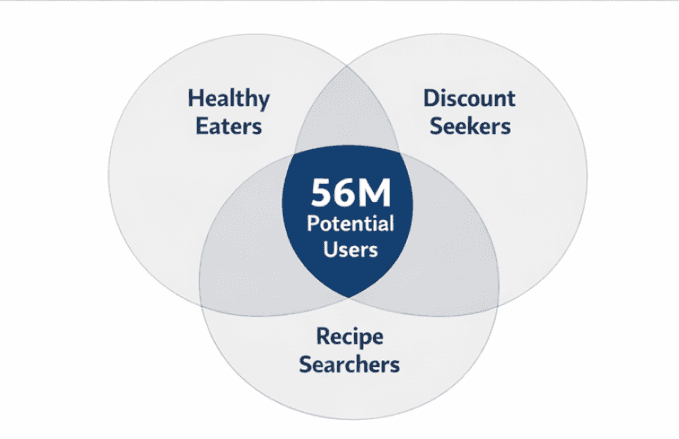
This isn’t a niche problem. It’s a large behavioral overlap.
75%
Actively search for grocery discounts
60%
Try to eat healthier or follow a diet
Behavioral Overlap
A large segment simultaneously seeks savings, health, and meal inspiration.
Demographic Breakdown
Budget-conscious and health-aware consumers span multiple age groups, not a single demographic.
What I Bring to Product Design
Value Proposition
Organizing the core structure of Foodi to help users discover, plan, and shop smarter for budget-friendly meals.
What should I cook?
What can I afford?
Foodi answers both
Smarter meals. Real savings.
What I Bring to Product Design
Experiment Setup
6-weeks behavioral experiment
Meal suggestions delivered via email
Diet-specific recipes matched to deals
Weekly grocery discounts collected
30 Walmart shoppers
Validating the concept before building
Collected
Real Discounts
Matched
Recipes to Deals
Sent Email
Suggestions
Observed
Cooking Behavior
No app. No interface. Just behavior testing
What We Learned
Users engaged more when meals were personalized to their diet
80%
Over 80% of participants cooked at least one of the suggested meals —
a strong signal for a test without a digital product
Behavioral Overlap
Cheaper and faster consistently came up as the main drive
Demographic Breakdown
Budget-conscious and health-aware consumers span multiple age groups, not a single demographic.
What I Bring to Product Design
Content
Store discounts
Dietary preferences
Meal planning
into simple, affordable meal suggestions
Foodi collects nearby grocery discounts, matches them with relevant recipes, and suggests meals that are both affordable and practical.
A smart shopping list is automatically generated.
For example, if one store has 50% off chicken breast, and another offers deals on sweet potatoes and broccoli, FOODI combines these discounts into a delicious, healthy meal — grilled chicken with steamed broccoli and sweet potatoes.
Normally, this meal might cost around $8, but with Eat8, Jesica can make it for just $4 — a healthy, budget-friendly dinner made easy.
With FOODI saving money and eating well go hand in hand — effortlessly.
How It Works
HOW IT WORKS
Foodi collects nearby grocery discounts, matches them with relevant recipes, and suggests meals that are both affordable and practical.
A smart shopping list is automatically generated.
For example, if one store has 50% off chicken breast, and another offers deals on sweet potatoes and broccoli, FOODI combines these discounts into a delicious, healthy meal — grilled chicken with steamed broccoli and sweet potatoes.
Normally, this meal might cost around $8, but with Eat8, Jesica can make it for just $4 — a healthy, budget-friendly dinner made easy.
With FOODI saving money and eating well go hand in hand — effortlessly.
Key Features
People want to eat healthy
Healthy meals often feel expensive when shoppers try to stay within budget
Discounts drive impulse purchases
Promotions often trigger unplanned buying instead of structured meal planning.
Discounts don't translate into meals
Shoppers see many deals but don't know how to turn them into meals.
Budget pressure creates stress
Constant price comparison creates decision fatigue while shopping.
Foodi collects nearby grocery discounts, matches them with relevant recipes, and suggests meals that are both affordable and practical.
A smart shopping list is automatically generated.
For example, if one store has 50% off chicken breast, and another offers deals on sweet potatoes and broccoli, FOODI combines these discounts into a delicious, healthy meal — grilled chicken with steamed broccoli and sweet potatoes.
Normally, this meal might cost around $8, but with Eat8, Jesica can make it for just $4 — a healthy, budget-friendly dinner made easy.
With FOODI saving money and eating well go hand in hand — effortlessly.
How It Works
What I Bring to Product Design
IA
Organizing the core structure of Foodi to help users discover, plan, and shop smarter for budget-friendly meals.
Design Intent
The information architecture separates quick decision-making on Home from active exploration in Discover, helping users move from grocery discounts to structured meal planning with less cognitive effort.
Content
What I Bring to Product Design
Content
Core Experience Highlights
Key capabilities that make Foodi easier to use, more personalized, and more actionable
Set Preferences
Define dietary needs, budget, and household context.
Explore Savings
Browse personalized deals and meal suggestions based on available discounts.
Choose a Meal
Select a meal that fits both user preferences and budget.
Review Recipe
Check ingredients, directions, and estimated cost.
Add to Plan
Save the selected meal to the weekly meal plan.
Generate Shopping List
Turn planned meals into an actionable grocery list.
What I Bring to Product Design
Content
Core Experience Highlights
Key capabilities that make Foodi easier to use, more personalized, and more actionable

What I Bring to Product Design
Content
Core Experience Highlights
Key capabilities that make Foodi easier to use, more personalized, and more actionable
Key Features
People want to eat healthy
Healthy meals often feel expensive when shoppers try to stay within budget
Discounts drive impulse purchases
Promotions often trigger unplanned buying instead of structured meal planning.
Discounts don't translate into meals
Shoppers see many deals but don't know how to turn them into meals.
Budget pressure creates stress
Constant price comparison creates decision fatigue while shopping.
Foodi collects nearby grocery discounts, matches them with relevant recipes, and suggests meals that are both affordable and practical.
A smart shopping list is automatically generated.
For example, if one store has 50% off chicken breast, and another offers deals on sweet potatoes and broccoli, FOODI combines these discounts into a delicious, healthy meal — grilled chicken with steamed broccoli and sweet potatoes.
Normally, this meal might cost around $8, but with Eat8, Jesica can make it for just $4 — a healthy, budget-friendly dinner made easy.
With FOODI saving money and eating well go hand in hand — effortlessly.
How It Works
Key Features
People want to eat healthy
Healthy meals often feel expensive when shoppers try to stay within budget
Foodi collects nearby grocery discounts, matches them with relevant recipes, and suggests meals that are both affordable and practical.
A smart shopping list is automatically generated.
For example, if one store has 50% off chicken breast, and another offers deals on sweet potatoes and broccoli, FOODI combines these discounts into a delicious, healthy meal — grilled chicken with steamed broccoli and sweet potatoes.
Normally, this meal might cost around $8, but with Eat8, Jesica can make it for just $4 — a healthy, budget-friendly dinner made easy.
With FOODI saving money and eating well go hand in hand — effortlessly.
How It Works
Discounts drive impulse purchases
Promotions often trigger unplanned buying instead of structured meal planning.
Discounts don't translate into meals
Shoppers see many deals but don't know how to turn them into meals.
Budget pressure creates stress
Constant price comparison createsdecision fatigue while shopping.