Museum
This project started with a simple question:
How can we use AI to make museum experiences feel more alive, engaging, and easier to connect with, without compromising historical authenticity?
In collaboration with the Museum of the American Revolution, I worked with two damaged historical portraits that, despite their significance, can feel distant to modern audiences.
To explore this, I created multiple AI-enhanced versions using animation, color, and narration, then studied how these changes influenced engagement, trust, and historical perception.
The goal was not to make history feel more artificial — it was to understand how technology can help people connect with it more deeply.
Museum
This project started with a simple question:
How can we use AI to make museum experiences feel more alive, engaging, and easier to connect with, without compromising historical authenticity?
In collaboration with the Museum of the American Revolution, I worked with two damaged historical portraits that, despite their significance, can feel distant to modern audiences.
To explore this, I created multiple AI-enhanced versions using animation, color, and narration, then studied how these changes influenced engagement, trust, and historical perception.
The goal was not to make history feel more artificial — it was to understand how technology can help people connect with it more deeply.
Museum
This project started with a simple question:
How can we use AI to make museum experiences feel more alive, engaging, and easier to connect with, without compromising historical authenticity?
In collaboration with the Museum of the American Revolution, I worked with two damaged historical portraits that, despite their significance, can feel distant to modern audiences.
To explore this, I created multiple AI-enhanced versions using animation, color, and narration, then studied how these changes influenced engagement, trust, and historical perception.
The goal was not to make history feel more artificial — it was to understand how technology can help people connect with it more deeply.
ROLE
UX Researcher & AI Experience Designer
PROJECT TYPE
Graduate Research · AI-Enhanced Museum Experience
Partner
Museum of the American Revolution
12 months
DURATION
Engagement, Trust, Historical Authenticity, AI Storytelling
FOCUS
A/B Testing· User Testing· Survey Design· Comparative Analysis
METHODS
TOOLS
ComfyUI · Kling AI · Topaz Photo AI · DaVinci Resolve · ElevenLabs
Research Findings from 170 Participants
Outcome
ROLE
UX Researcher & AI Experience Designer
PROJECT TYPE
Graduate Research · AI-Enhanced Museum Experience
Partner
Museum of the American Revolution
12 months
DURATION
Engagement, Trust, Historical Authenticity, AI Storytelling
FOCUS
A/B Testing· User Testing· Survey Design· Comparative Analysis
METHODS
TOOLS
ComfyUI · Kling AI · Topaz Photo AI · DaVinci Resolve · ElevenLabs
Research Findings from 170 Participants
Outcome
ROLE
UX Researcher & AI Experience Designer
PROJECT TYPE
Graduate Research · AI-Enhanced Museum Experience
Partner
Museum of the American Revolution
12 months
DURATION
Engagement, Trust, Historical Authenticity, AI Storytelling
FOCUS
A/B Testing· User Testing· Survey Design· Comparative Analysis
METHODS
TOOLS
ComfyUI · Kling AI · Topaz Photo AI · DaVinci Resolve · ElevenLabs
Research Findings from 170 Participants
Outcome


The Problem
The Problem
Understanding how historical portraits are experienced today
Understanding how historical portraits are experienced today
Static & Distant Visuals
Static & Distant Visuals
Historical portraits often feel still, sometimes damaged, and emotionally distant, making it difficult for visitors to connect with the people behind them.
Changing Audience Expectations
Changing Audience Expectations
Today, most of what we experience feels fast, visual, and in motion — like the content we see every day on Instagram or TikTok.
Authenticity Must Be Preserved
Historical materials can’t simply be altered for engagement. Any intervention must respect authenticity and preserve trust.
Static & Distant Visuals
Historical portraits often feel still, sometimes damaged, and emotionally distant, making it difficult for visitors to connect with the people behind them.
Changing Audience Expectations
Today, most of what we experience feels fast, visual, and in motion — like the content we see every day on Instagram or TikTok.
Authenticity Must Be Preserved
Historical materials can’t simply be altered for engagement. Any intervention must respect authenticity and preserve trust.
Research Question
Research Question
How can we use AI to make historical portraits more engaging for modern audiences without compromising historical authenticity?
Research
I explored three perspectives: theory, authenticity, and audience experience.
Engagement in Visual Storytelling
I reviewed literature on what makes visual experiences feel more engaging, emotionally resonant, and alive.
Authenticity in Historical Representation
I examined research on historical authenticity, preservation ethics, and how visual intervention can affect trust
Audience Conversations
I spoke with people about how they respond to historical imagery, what draws them in, and what makes an experience feel meaningful, believable, or emotionally engaging.
Research
I explored three perspectives: theory, authenticity, and audience experience.
Engagement in Visual Storytelling
I reviewed literature on what makes visual experiences feel more engaging, emotionally resonant, and alive.
Authenticity in Historical Representation
I examined research on historical authenticity, preservation ethics, and how visual intervention can affect trust
Audience Conversations
I spoke with people about how they respond to historical imagery, what draws them in, and what makes an experience feel meaningful, believable, or emotionally engaging.
Research
I explored three perspectives: theory, authenticity, and audience experience.
Engagement in Visual Storytelling
I reviewed literature on what makes visual experiences feel more engaging, emotionally resonant, and alive.
Authenticity in Historical Representation
I examined research on historical authenticity, preservation ethics, and how visual intervention can affect trust
Audience Conversations
I spoke with people about how they respond to historical imagery, what draws them in, and what makes an experience feel meaningful, believable, or emotionally engaging.
Key Insights
Key Insights
The challenge is not simply to make historical portraits more engaging, but to do so in a way that preserves authenticity.
The challenge is not simply to make historical portraits more engaging, but to do so in a way that preserves authenticity.
Design Strategy
To increase engagement without compromising authenticity, I focused on three key design decisions.
Build in Layers
Instead of changing everything at once, I introduced each element gradually — from enhancement and color to motion and voice — so I could understand the role each one played.
Keep Motion Subtle
Motion needed to feel natural, not theatrical. I used small, human-like movements that made the portraits feel more alive without making them feel artificial.
Use Narrative to Create Connection
Voice and storytelling helped create a stronger emotional connection, while still staying grounded in the portrait’s historical context.
Design Strategy
To increase engagement without compromising authenticity, I focused on three key design decisions.
Build in Layers
Instead of changing everything at once, I introduced each element gradually — from enhancement and color to motion and voice — so I could understand the role each one played.
Keep Motion Subtle
Motion needed to feel natural, not theatrical. I used small, human-like movements that made the portraits feel more alive without making them feel artificial.
Use Narrative to Create Connection
Voice and storytelling helped create a stronger emotional connection, while still staying grounded in the portrait’s historical context.
Design Strategy
To increase engagement without compromising authenticity, I focused on three key design decisions.
Build in Layers
Instead of changing everything at once, I introduced each element gradually — from enhancement and color to motion and voice — so I could understand the role each one played.
Keep Motion Subtle
Motion needed to feel natural, not theatrical. I used small, human-like movements that made the portraits feel more alive without making them feel artificial.
Use Narrative to Create Connection
Voice and storytelling helped create a stronger emotional connection, while still staying grounded in the portrait’s historical context.
Historical Subjects
Historical Subjects
Selecting the Subjects
I selected two historical portraits from the Museum of the American Revolution
Selecting the Subjects
I selected two historical portraits from the Museum of the American Revolution

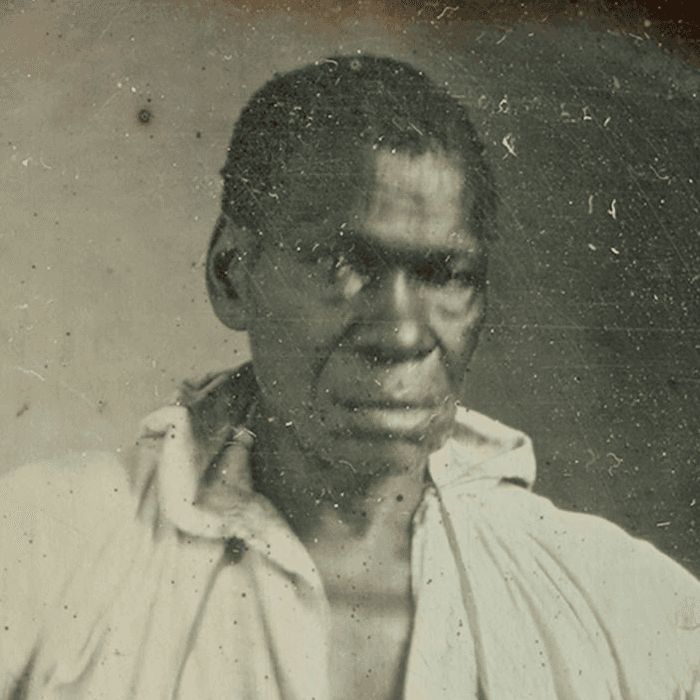
Isaac Granger Jefferson
1775- 1846
Enslaved at Monticello, Isaac worked as a skilled blacksmith and later gained his freedom.
He later shared his life story, offering a rare firsthand account of enslaved life.

Anna Warner Bailey
1758- 1851
Anna was known for her bravery during the Battle of Groton Heights.
She tore her petticoat to provide materials for soldiers, helping them continue the fight.
Using two subjects helped reduce bias and allowed for comparison across different identities and responses.
Experiment Design
Experiment Design
From One Portrait to Multiple Variations
Instead of treating AI as a single output, I designed a series of variations, each introducing a new layer.
From enhancement and colorization to motion and voice, each step allowed me to isolate how different elements influence perception.
This made it possible to understand what actually changes engagement and trust, rather than just observing a final result.
From One Portrait to Multiple Variations
Instead of treating AI as a single output, I designed a series of variations, each introducing a new layer.
From enhancement and colorization to motion and voice, each step allowed me to isolate how different elements influence perception.
This made it possible to understand what actually changes engagement and trust, rather than just observing a final result.

From One Portrait to Multiple Variation
I started with one historical portrait and gradually added different layers: enhancement, color, motion, voice, lip-sync, and final editing.
By building the variations step by step, I could see how each layer shaped the way people connected with the story.
Variation Testing
The Variation Test
To understand what shapes audience perception, I created multiple versions of each portrait by systematically varying motion, color, and narration.
The Variation Test
To understand what shapes audience perception, I created multiple versions of each portrait by systematically varying motion, color, and narration.
Base Versions
Original Portrait
Orginal

Upscaled Portrait
Upscaled

Colorized Portrait
Colorized
Short Animated Versions

Animated portrait
10s · No audio
Animated portrait
10s · First-person narration
Animated portrait
10s · Third-person narration
Long Animated Versions

Animated portrait
60s · First-person narration

Animated portrait
60s · Third-person narration
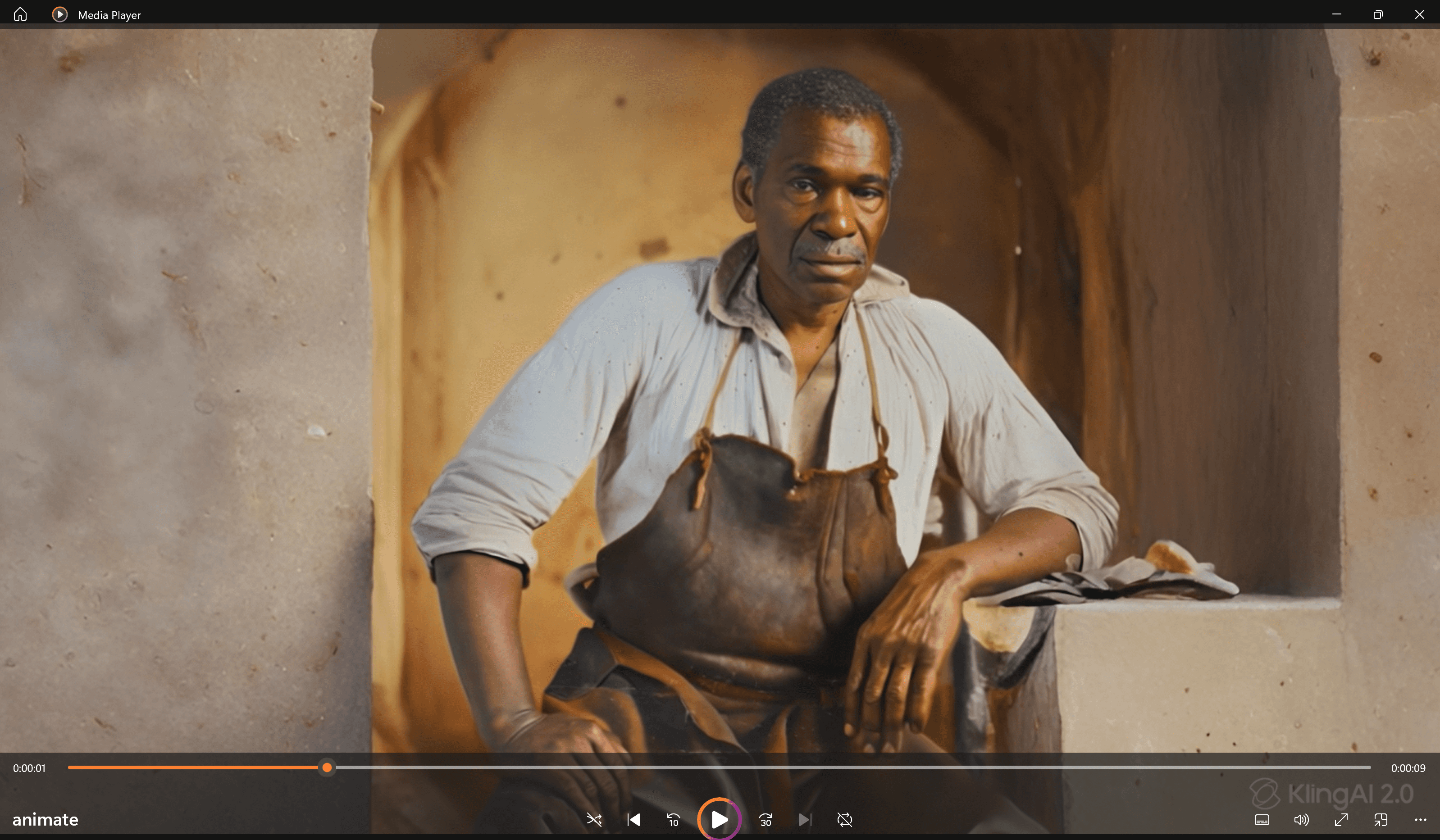
Animated portrait
60s · Hybrid narration
Testing
Testing
Evaluating the Portrait Variations
To understand what actually shapes audience experience, I approached this as a two-phase A/B test after receiving IRB approval.
In the first phase, I tested 8 different variations online across two portraits — allowing me to compare responses while reducing bias.
Then, I selected 4 variations and tested them again in a real museum setting to see how context changes the experience.
Evaluating the Portrait Variations
To understand what actually shapes audience experience, I approached this as a two-phase A/B test after receiving IRB approval.
In the first phase, I tested 8 different variations online across two portraits — allowing me to compare responses while reducing bias.
Then, I selected 4 variations and tested them again in a real museum setting to see how context changes the experience.
Online Testing
The first phase used a broader set of portrait variations in a controlled online setting to identify which elements most strongly shaped engagement, trust, and authenticity.
Participants : 120

Anna
3 variations
Isaac:
5 variations
Structure
Original + 1 AI variation
Assignment
Random
Platform
Qualtrics
Phase 1 Findings
Several clear patterns emerged from the online phase.
Narration had the strongest effect
Narration had the strongest effect
Narrated versions created stronger emotional responses than visual enhancement alone.
Color alone had limited impact
Color alone had limited impact
Color made the portraits feel clearer, but it did not create the same level of emotional connection as narration.
Story delivery shaped perception
The way the story was told changed how participants understood trust, emotion, and authenticity.
Narration had the strongest effect
Narrated versions created stronger emotional responses than visual enhancement alone.
Color alone had limited impact
Color made the portraits feel clearer, but it did not create the same level of emotional connection as narration.
Story delivery shaped perception
The way the story was told changed how participants understood trust, emotion, and authenticity.
In-Museum Testing
In the second phase, selected variations were tested in a real museum context to understand how audience response changed in a more situated environment.
Participants : 50
Anna
2 variations
Isaac:
2 variations
Structure
Original + 1 AI variation
Assignment
Random
Platform
Qualtrics
Phase 2 Findings
Several clear patterns emerged from the online phase.
Longer stories increased engagement — but also fatigue
Longer stories increased engagement — but also fatigue
Longer videos helped participants understand the story more deeply, but some visitors found them harder to finish.
Short animations were easier to engage with
10-second animated versions were quicker to process and often felt more accessible in a museum setting.
First-person narration felt more personal
Visitors more often described first-person storytelling as emotionally connecting and human.
Longer stories increased engagement — but also fatigue
Longer videos helped participants understand the story more deeply, but some visitors found them harder to finish.
Short animations were easier to engage with
10-second animated versions were quicker to process and often felt more accessible in a museum setting.
First-person narration felt more personal
Visitors more often described first-person storytelling as emotionally connecting and human.
Results
Cross-Phase Insights
Across both online and in-museum testing, clear patterns emerged around emotion, trust, and storytelling.
Narration drives engagement
Storytelling consistently created stronger emotional responses than visual enhancement alone.
Context changes perception
Experiences that worked well online were interpreted differently in a museum setting.
Subtlety builds authenticity
Small, natural motions felt more believable and meaningful than exaggerated effects.
Results
Cross-Phase Insights
Across both online and in-museum testing, clear patterns emerged around emotion, trust, and storytelling.
Narration drives engagement
Storytelling consistently created stronger emotional responses than visual enhancement alone.
Context changes perception
Experiences that worked well online were interpreted differently in a museum setting.
Subtlety builds authenticity
Small, natural motions felt more believable and meaningful than exaggerated effects.
Results
Cross-Phase Insights
Across both online and in-museum testing, clear patterns emerged around emotion, trust, and storytelling.
Narration drives engagement
Storytelling consistently created stronger emotional responses than visual enhancement alone.
Context changes perception
Experiences that worked well online were interpreted differently in a museum setting.
Subtlety builds authenticity
Small, natural motions felt more believable and meaningful than exaggerated effects.
What I Bring to Product Design
Cross-Phase Insights
Across both online and in-museum testing, clear patterns emerged around emotion, trust, and storytelling.
Narration drives engagement
Storytelling consistently created stronger emotional responses than visual enhancement alone.
Context changes perception
Experiences that worked well online were interpreted differently in a museum setting.
Subtlety builds authenticity
Small, natural motions felt more believable and meaningful than exaggerated effects.
What I Bring to Product Design
Cross-Phase Insights
Across both online and in-museum testing, clear patterns emerged around emotion, trust, and storytelling.
Narration drives engagement
Storytelling consistently created stronger emotional responses than visual enhancement alone.
Context changes perception
Experiences that worked well online were interpreted differently in a museum setting.
Subtlety builds authenticity
Small, natural motions felt more believable and meaningful than exaggerated effects.